Pauca Verba is Latin for A Few Words.
Showing posts with label Ordination Anniversary. Show all posts

Sunday, October 27, 2019

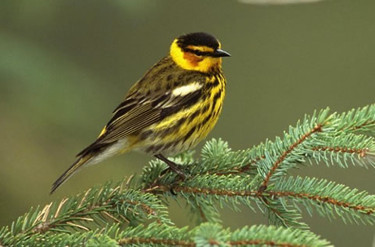
Cape May Warbler and Forty Years Ordained


Cape May Warbler on Conifer Branch


How blessed am I—ordained forty years ago this weekend. Anyone who's done anything for forty years can say, "There's a lot of water under the bridge."  In 1979 I ran full flood into my new priesthood, at once crashing into disappointment that lasted years. I don't think priesthood is any more difficult  than any other way of life serious people choose to live: growing through the stresses of relationships, raising children, slugging it out in a demanding job, keeping faith alive. Then, there is the inner work of trying to evolve into the real and full person God hoped I'd become. That may be the hardest part of all.

So, what about this priest and the Cape May Warbler? God went to a lot of trouble to create our planet-home, and I believe he put the animals into our lives that they might in some way be lovely companions. Someone might say that sounds flaky, but I don't think so. In the Genesis story, God gave us (not the angels) the honor of naming the animals. I wish we felt that more deeply.

When we encounter the animals then, we might pay particular attention, as they may have a message for us, especially as we research how they survive and thrive. Earlier this week I stumbled on an online photograph of a Cape May Warbler. Thrilled by its beauty, I did some investigating.

The Cape May is one of fifty species of warblers living in the United States and Canada. We don't see them at our feeders because they're forest dwellers. But very adaptable at that! The Cape May generally lives in conifer (evergreen) forests, but can also adapt and live among deciduous trees and even thickets at the edge of  the forest. In its winter range it's found feeding in the tops of Florida or Caribbean palm trees.

Cape May Warblers migrate by night because the air is calmer, cooler and there are fewer predators to avoid. This wonder-bird can hang upside down to get at insects hidden underneath leaves. It even has a tubular tongue which can suck the nectar out of flowers and juice out of ripe fruit. 

So the Cape May Warbler is a skilled survivor. A friend wrote recently, "Of the thousands of people you have known as a priest over these many years, which ones stand out in your memory?" That's an easy and pleasing question to answer: the strugglers and survivors stand out. Arnold, who was deaf, unable to speak, and who spent the day kneeling under the crucifix in church. The folks in AA who follow the sobering-discipline of honesty, generosity and surrender. The parents of special needs kids. The husband who on Christmas night kept vigil over his dying wife in hospice. The college kids who prayed with me standing around their dear friend who had just died of AIDS complications. The hospital crew who cleaned and sterilized the ER when the awful emergency was over. The young soldier banging on the door in the middle of the night, shaking and weeping, hours before he had to show up to begin his third tour in Iraq.

My own priesthood story is a story not only of survival through the  disappointment, but thriving. A counselor who knew me well said, "Stephen, the house is on fire, and you're trying to get a few things out to safety." That's especially true this time in my life, which now intersects with you—folks all around the world. I send my prayer, and a blessing for you and your families. May you stay standing in the dark chaos, but also thrive in God's Christ-love for you and all of wounded humankind.


Sunday, October 26, 2014

Newly Ordained and Meeting Arnold


THIS MUG BELONGED TO ARNOLD DE PAUL  who was a parishioner in my first parish where I was a curate or junior-assistant priest thirty-five years ago. Arnold was middle-aged, deaf and mute and would often come to church, not to weekday Mass, but simply to visit. Our paths would cross when I'd be on a church errand; I'd find him kneeling at the foot of the large crucifix on the side wall or at the communion rail.

Arnold made sounds which I couldn't distinguish as words. I expect my own anxieties got in the way, such that it never occurred to me to sit him down to see if he could write or read lips. A foolishly missed opportunity. We communicated only through smiles, handshakes and hugs. In this world of lonely alienation perhaps that is more than he received elsewhere. 

In the spring a senior Washington official died who had a home in the parish. President and Mrs. Reagan flew in for the funeral, the bishop celebrated the funeral Mass, the choir sang, there was a police escort for the lengthy procession to the cemetery, the candles burned and the flowers (like the accolades) were abundant. Like a potted palm, I stood in the sanctuary corner and watched.

A few weeks later Arnold died.  I was told to "do his funeral Mass" which pleased me. Arnold's casket was the cheapest, called a doeskin box because of the soft cloth covering designed to conceal the knots in the wood. The only worshipers were his two out-of-town sisters, the undertaker, the cantor, organist and myself. There were no speeches, no flowers and only the two required candles on the altar.

At the end of the Mass I spoke with the sisters for a few moments, briefly telling them how Arnold and I knew each other. They said they'd be around for a week or so, clearing out his apartment before heading back to their own homes. I asked them if they came across some little thing of his that they could let go of, might I have it to remember him by. 

A few days later this mug, wrapped in plain paper, was left for me at the rectory office. There was a note inside the mug telling me that some years prior Arnold had gone on retreat to the French-founded Trappist abbey-monastery of Our Lady of Gethsemani in Kentucky. The monks either made the mugs themselves or imported them from a monastery in France.

The mug is curious of course because it has two handles. A little investigation disclosed that French babies learn to drink from cups with two handles, making it easier to hold on tight with both hands. The monks retained this image to remind them of their own littleness and weakness. To "Become like little children" Jesus said, acknowledging being loved in one's dependent vulnerability. 

St. Therese of Lisieux wrote of living in her convent with twenty or so other women, "Sometimes I feel as if I am living inside a volcano." I get it, living in this polarized, often contentious, sometimes mean-spirited Church.  But in the midst of that I met Arnold. I'm thinking gratefully: how is it that in this life, with all of its vagaries, for seconds in each of our life's story, Arnold's path and my path crossed. I witnessed his prayer born of vulnerability and struggle.

And over thirty-five years of priesthood (today being the anniversary of ordination) that kind of wondrous intersecting has been played out over and over again. That witnessing has been the best part of my priesthood.